Coco
coco launchpad

Launch it. Trade it.
Let it off the leash.

A permissionless memecoin launchpad on Robinhood Chain, run by Coco — a very good dog. Launch a coin for about a dollar, trade it on a bonding curve, and graduate it to Uniswap V3 where the whole market can reach it.

i
This documentation covers what coco launchpad is, how to use it, the mechanics behind every trade, and the API + events for the aggregators, bots and swaps that want to plug in.
Overview

Introduction

coco launchpad lets anyone create a token in one transaction, for a flat anti-spam fee of 0.000535 ETH (about $1). No allowlist, no forms, no team approval — the contracts do everything.

Every coin opens on a bonding curve: a fair, on-chain market where the price rises as people buy and falls as they sell. When a coin fills its curve, it graduates to a real Uniswap V3 pool — the venue where Robinhood Chain's liquidity, traders and trading bots actually live — with its liquidity permanently locked.

The platform is built around $COCO, the official coin of the dog who runs the place. A slice of every trade buys $COCO back and burns it.

NetworkRobinhood Chain (L2) · chainId 4663 · gas paid in ETH
Explorerrobinhoodchain.blockscout.com (Blockscout)
Launch fee0.000535 ETH (~$1), paid on-chain
Trade fee1% · split 40% creator / 40% platform / 20% $COCO buyback-burn
GraduationUniswap V3 pool, full-range LP, permanently locked + fee-collecting
Supply1,000,000,000 per token (800M on the curve)
Overview

Getting Started

1 · Connect a wallet

Any injected wallet (e.g. MetaMask) set to Robinhood Chain. You need a little ETH for gas and for whatever you buy. If a buy says "insufficient funds", it's your wallet's ETH — lower the amount or top up.

2 · Launch a coin

Name, ticker, image, optional description and links. Pay the 0.000535 ETH fee and your bonding curve is live instantly. An optional dev buy lets you grab the first bag at launch, capped on-chain so it can't dominate.

3 · Trade

Buy and sell on the curve at any time. Selling on the curve is the inverse of buying — you can always exit for roughly what you put in, minus fees. There is a small anti-sniper cap in the first minutes (see How It Works).

4 · Earn as a creator

You earn 40% of every trade fee on your coin, claimable any time. After graduation you keep earning from the locked Uniswap position's fees.

Mechanics

How It Works

The bonding curve

Each coin trades against a constant-product curve with virtual reserves. Price = ETH reserve / token reserve, so it rises smoothly as tokens are bought and falls as they're sold. 800M tokens sit on the curve; the price you get is always exact and on-chain — no order book, no market maker.

Anti-sniper window

For the first 3 minutes after launch, each wallet can buy at most 1% of the curve supply. This stops a single sniper from eating the whole launch before anyone else gets a look. The interface warns you before you hit the cap — you never see a raw error.

Fees, split three ways

1% of every trade40% creator40% platform20% buy & burn $COCO

The creator and platform shares are claimable ETH. The 20% slice feeds a shared pot that periodically buys $COCO on its own market and burns it — a deflationary sink for the platform's coin.

Graduation

When a curve accumulates 0.5 ETH of backing, it locks and graduates. The accumulated ETH (minus a 2% migration fee and a small caller bounty) seeds a brand-new Uniswap V3 pool at the exact final curve price — a zero-arbitrage migration, so there's no instant gap to exploit. The full-range LP is locked permanently, but its trading fees are still collected and split 40/40/20, just like curve fees. Graduation is permissionless: anyone can trigger it and earn the bounty.

i
Why Uniswap V3. It's where Robinhood Chain's real volume, aggregators, and Telegram trading bots live. A standard V3 pool is tradeable by every swap UI, router and bot — the moment a coin graduates, the ecosystem can reach it automatically.

What you recover

Because holders buy cheap on the curve, in any normal scenario sellers recover more than they put in. Only a total, simultaneous panic dump drops collective recovery to ~72% — and even then most of the shortfall is the permanent liquidity floor backing the coin, not a fee. The migration itself is designed to lose the minimum physically possible.

Mechanics

Dev Economics — When to Graduate

Graduation is a one-way door. Before it, the curve is your safety net: if no one is buying, sell back on the curve and recover ~98% (just the round-trip fee). Don't force-graduate a coin nobody is trading.

If you self-fund a graduation and zero volume follows, an AMM always locks a residual (~24%) that a lone holder can't drain — that's physics, not a bug. The way a launch pays off is demand: any real buying lets you sell into other people's ETH, and any post-graduation volume pays you fees on the locked position. That's why the platform is built to be tradeable everywhere — so volume, and your fees, are never zero.

!
Rule of thumb. Curve = your escape hatch. Graduate when there's demand; otherwise you're providing free liquidity to a coin no one wants.
For Developers

Contract Reference

Three contracts, all verified and open-source on Blockscout. Live addresses are published in the site header and via the API at launch.

ContractRole
CocoPadCoreFactory + bonding curves + fee accounting + graduation. The one address you index.
CocoPadTokenPer-coin ERC-20 (deterministic, vanity address ending …c0c0). No owner, no mint, no pause — renounced by construction.
CocoPadLockerHolds each graduated Uniswap V3 LP forever; collects and routes the fees.

Key entry points

// create a coin (payable: launch fee + optional dev buy)
function createToken(string name, string symbol, string metadataURI, uint256 minTokensOut, bytes32 salt) payable returns (address token);

// trade on the curve
function buy(address token, uint256 minTokensOut) payable returns (uint256 tokensOut);
function sell(address token, uint256 tokensIn, uint256 minEthOut) returns (uint256 ethNet);

// permissionless graduation to Uniswap V3 (caller earns the bounty)
function graduate(address token);

// claim your fees
function claimCreatorFees(address token) returns (uint256 amount);
For Developers

Integration Guide

Everything an aggregator, indexer or bot needs to surface coco launchpad coins with prices, images and lifecycle state.

Track the lifecycle from three events

TokenCreated Trade (buy/sell) Graduated
  • New coin: TokenCreated on the Core gives you the token address, creator, name, symbol and metadata URI.
  • Bonding progress: each Trade carries the new reserves (newTReal, newJV, newTV) — price is newTV / newJV, and curve progress is newTReal / gradTargetWei.
  • Migration: Graduated fires with the Uniswap V3 pool id — from there, read the standard V3 pool directly.

Images & metadata (hosted, indexer-friendly)

Every coin exposes a real HTTP image and standard metadata JSON, so you never have to parse an on-chain data-URI:

GET https://launch.cocodog.fun/api/img/<token>    // image/webp
GET https://launch.cocodog.fun/api/meta/<token>   // { name, symbol, image, description, twitter, telegram, website }
For Developers

Public API

Read-only, cached, CORS-open. Base URL https://launch.cocodog.fun

EndpointReturns
GET /api/tokensAll coins with price, mcap, 24h volume, curve %, image.
GET /api/token/<addr>One coin: full market + identity + holders + socials.
GET /api/trades/<addr>Recent trades for a coin.
GET /api/img/<addr>The coin's image (image/webp).
GET /api/meta/<addr>Standard metadata JSON with an HTTP image URL.
For Developers

Events & ABI

The three events you index, verbatim from the verified Core:

event TokenCreated(
  address indexed token, address indexed creator,
  string name, string symbol, string metadataURI,
  uint256 gradTargetWei, uint16 feeBps,
  uint16 platformShareBps, uint16 creatorShareBps, uint16 burnShareBps,
  uint16 migrationFeeBps, uint256 launchFeePaid);

event Trade(
  address indexed token, address indexed trader, bool indexed isBuy,
  uint256 ethGross, uint256 ethNet, uint256 tokenAmount,
  uint256 feePlatform, uint256 feeCreator, uint256 feeCoco,
  uint128 newTReal, uint128 newJV, uint128 newTV);

event Graduated(
  address indexed token, bytes32 indexed poolId,
  uint256 positionTokenId, uint256 ethToPool, uint256 tokensToPool, uint256 residualBurned);

The full ABI JSON is served alongside the verified source on Blockscout.

Resources

Brand Assets

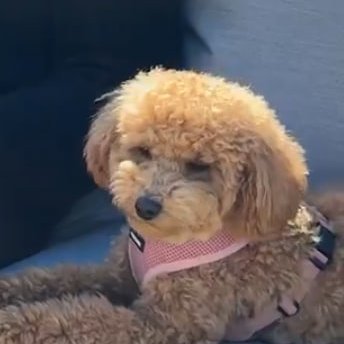
Coco is the identity — a mini goldendoodle and the dev of the house. Keep her warm and real; the palette is cream and pastel, never dark or generic.

Coco
built by coco. i'm a good dog.